Sports kit can still smell after washing, especially when sweat, body oils and moisture build up in close-fitting synthetics, padding or thick garments.
Running tops, cycling bib shorts, football shirts and Ju-Jitsu gear all face slightly different odour problems, so getting them fresh again is not simply a matter of using more detergent or hotter water.
What Should You Do When Sports Kit Starts to Smell?
Start by getting the kit out of a closed bag. If you cannot wash it straight away, spread it somewhere ventilated rather than leaving it damp and compressed.
Before washing:
- Remove loose mud, grass or chalk where necessary.
- Turn printed garments inside out.
- Separate anything likely to snag delicate or stretchy fabrics.
- Use the recommended detergent dose.
- Choose a low-temperature programme suitable for the garment.
- Dry everything fully before putting it away.
Why Does Leaving Sports Kit Damp Make Odour Harder to Shift?
Research into odour in clothing worn during exercise found that worn textiles can develop substantial malodour after exercise, with polyester producing more intense and less pleasant odour than cotton in the study.
Leaving sweaty kit damp and compressed gives odour more time to develop before washing. As odour-causing residues remain in the fabric, seams and padded areas, the smell may be more persistent by the time the kit reaches the wash.
This matters particularly for football and rugby bags, BJJ gear, travel clothing and PE kit forgotten at school.
Why Do Different Types of Sports Kit Develop Different Odour Problems?
|
Sport or garment |
Why smells can become stubborn |
Specific treatment or care point |
|
Running clothing |
Heavy perspiration, synthetic fabrics and frequent use |
Treat established odour while protecting prints and elastic |
|
Cycling kit |
Prolonged skin contact and padded areas |
Protect stretch, compression and multi-layer construction |
|
HYROX, CrossFit or weights kit |
Heavy sweat, close-fitting synthetics, repeated use and chalk |
Separate surface chalk from the actual odour problem |
|
Football or rugby kit |
Sweat combined with mud, grass, travel and damp team bags |
Protect badges, numbers and sponsor graphics |
|
BJJ rash guard |
Close contact, heavy perspiration and stretch synthetics |
Keep away from open Velcro and unnecessary heat |
|
BJJ gi |
High moisture load and thick, slow-drying fabric |
Follow gi-specific detergent and shrinkage instructions |
|
Sports bra |
High-contact areas, padding and elastic |
Protect hooks, cups, bands and shape |
|
PE kit |
Often left damp and compressed for several days |
Separate garments and treat established odour individually |
How to Get Smell Out of Running Clothes
Running tops, vests and tights are often lightweight synthetics worn directly against the skin. Remove sweaty kit promptly and hang it somewhere ventilated if washing has to wait.
Turn event shirts or other printed tops inside out before washing where appropriate. This helps protect applied graphics, names and numbers from unnecessary friction.
If the top smells again once it warms up during the next run, treat it as an established odour. GYMWASH can be used according to its directions rather than repeatedly adding detergent or raising the wash temperature.
How to Get Smell Out of Cycling Jerseys and Bib Shorts
Cycling bib shorts have a padded chamois that stays in prolonged contact with the body and can dry more slowly than the surrounding fabric. Wash jerseys and bib shorts promptly and make sure the padding dries completely before storage or reuse.
If an ordinary wash leaves a persistent smell around the chamois or jersey, use a compatible activewear odour treatment while protecting the garment’s stretch and multi-layer construction. GYMWASH can be used on suitable synthetic cycling kit where odour remains or returns, but more heat is not a substitute for proper treatment.
How to Get Smell Out of HYROX, CrossFit and Weight-Training Kit
HYROX, CrossFit and weight training combine heavy perspiration, repeated use, close-fitting synthetics and, often, chalk.
Shake or brush away loose chalk before washing because visible powder and persistent odour are separate problems. If the kit still smells after a normal wash, GYMWASH can be used on compatible synthetic activewear rather than simply adding more detergent. Turn printed garments inside out and avoid unnecessary heat.
How to Get Smell Out of Football and Rugby Kit
Football and rugby kits often combine sweat with mud, grass, travel and damp team bags. Remove loose mud and grass before washing.
Turn printed shirts inside out and protect sponsor graphics, names, numbers and badges from excessive heat and abrasion. If smell survives an ordinary wash, GYMWASH can be used on compatible synthetic teamwear. Unpack match or travel bags promptly and air damp clothing if washing has to wait.
How to Stop BJJ Rash Guards and Gis Smelling
Ju-Jitsu gear needs a clear distinction between rash guards and Gis because they create different odour and care problems.
Rash Guards
Rash guards are close-fitting synthetic garments that hold plenty of sweat against the skin. Remove them from the bag promptly, keep them away from open Velcro, and wash them at a suitable low temperature while avoiding unnecessary heat. If odour persists after washing, GYMWASH can be used on compatible synthetic rash guards according to the product directions.
BJJ Gis
A gi is thicker, can absorb more moisture and usually takes longer to dry. Take it out of the bag after training, wash it promptly and make sure it dries completely.
Do not automatically use the same detergent advice as for a synthetic rash guard. Tatami, for example, recommends organic or non-bio detergent for its own gis and warns against tumble drying because of shrinkage and loss of shape.
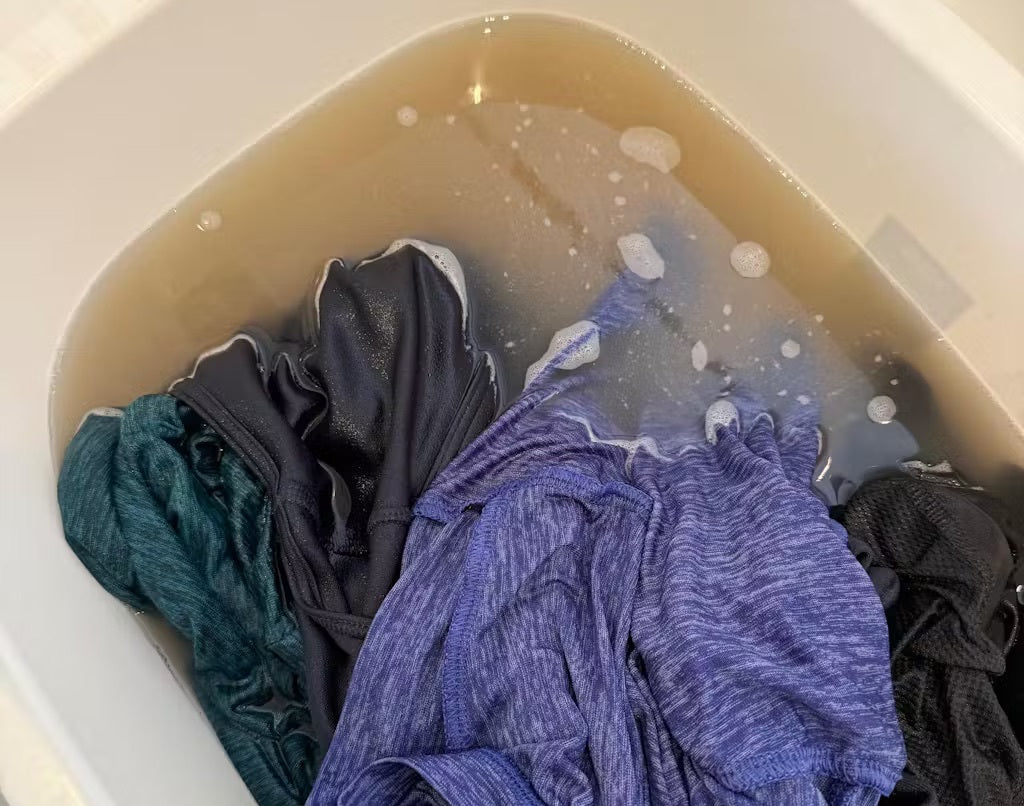
GYMWASH should therefore not be assumed suitable for every gi. Follow the individual garment’s detergent, temperature and shrinkage instructions. If odour persists, try a soak using GYMWASH activewear detergent
How to Get Smells Out of Sports Bras
Sports bras concentrate sweat around bands, cups and other high-contact areas. Padding can also retain moisture longer than the outer fabric.
Remove the bra promptly after training instead of leaving it damp in a gym bag. Fasten hooks where instructed, remove pads when the garment specifically calls for it, and use a laundry bag where appropriate to reduce snagging. Sports-bra care recommendations also emphasise prompt handling and protection of structured components.
For a compatible synthetic sports bra, wash at the permitted low temperature and allow the band, cups and padding to dry fully.
If odour remains after an ordinary wash, GYMWASH may be appropriate for standard synthetic sports bras, but specialist fabrics, padding or manufacturer-specific detergent requirements still need to be respected.
How to Freshen PE Kit That Has Been Left in a Bag
PE kit may sit damp in a school bag for several days. When the bag is opened, take everything out, air the garments, remove loose mud or food residue and separate items with different care requirements.
A verified GYMWASH customer reported that the product removed the smell from their child’s PE kit after it had been worn throughout a hot sports day. It is a particularly relevant example of the type of heavily worn, compatible kit this article addresses.
What About Smelly Trainers, Boots, Helmets and Other Equipment?
Do not automatically apply clothing treatments to trainers, football boots, helmets, gloves or shin pads. These may contain foams, adhesives, rigid components or specialist materials that are not designed for a normal machine cycle.
Football boots, for example, are generally better cleaned by hand and air dried. Follow the cleaning instructions for the individual item rather than treating everything in the kit bag like machine-washable clothing.
Where Does GYMWASH Fit?
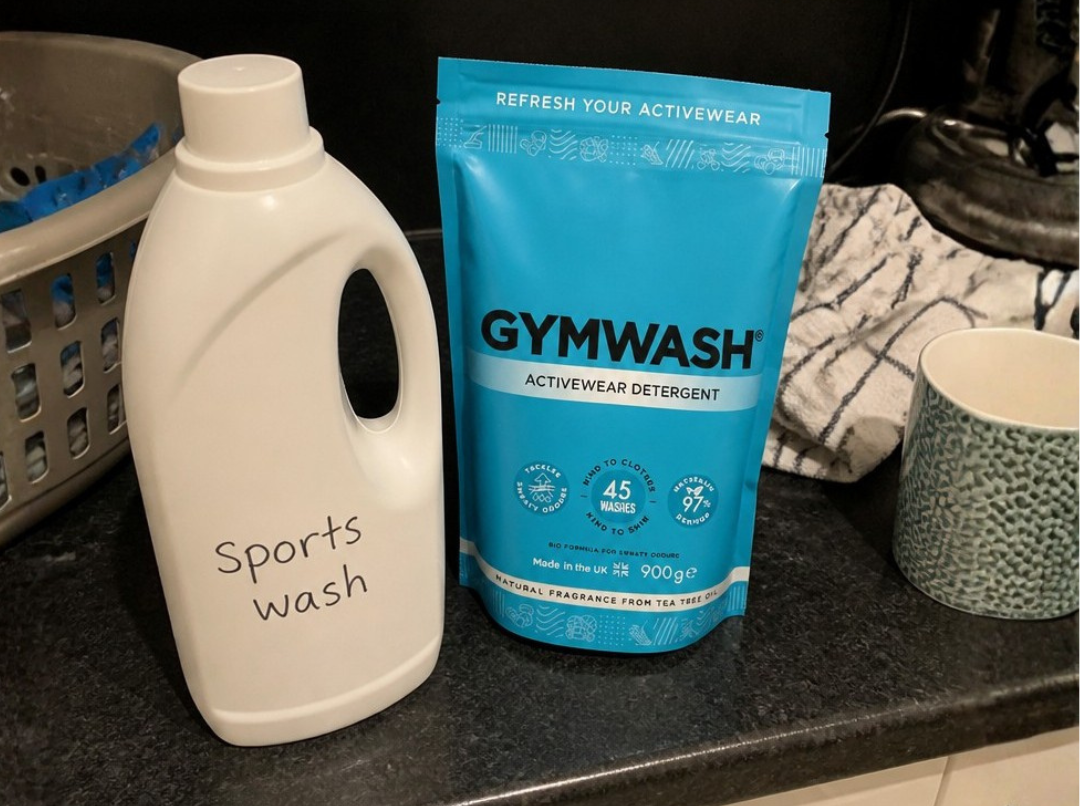
For compatible synthetic running tops, cycling jerseys, football shirts, rash guards, gym wear and PE clothing, GYMWASH Activewear Laundry Detergent is specifically relevant when odour has become established or keeps returning after an ordinary wash.
Its formulation tackles the deposits and odour problem through several routes. Surfactants help lift and disperse oily soil from the fabric, while enzymes target different types of organic residue. Proteases, for example, act on protein-based material, while lipases target fats and oils. The formula also uses an oxygen-based cleaning system as an additional route.
GYMWASH also contains zinc ricinoleate, which has been studied for its ability to adsorb odour-active compounds. This gives the formulation another route for dealing with remaining malodour rather than depending on fragrance alone.
GYMWASH is not suitable for Wool, merino and silk need specialist detergent care. Waterproof garments and GORE-TEX have their own membrane, coating and detergent requirements, and some BJJ gis specify non-bio detergent.
Click here to try GYMWASH on your smelly activewear now