Polyester, nylon, elastane, cotton, merino and waterproof activewear do not all need the same treatment.
For most ordinary synthetic and cotton gym clothing, the routine is straightforward: use a low-temperature wash, measure the detergent correctly, avoid unnecessary heat and dry the garment fully before putting it away.
The exceptions are garments whose fibres or construction need specialist care like waterproofs.
Why Does the Care Label Matter More Than the Fibre Name?
The care label comes first because it reflects the finished garment, not just the largest fibre percentage. Care instructions take account of colouring, finishes, accessories and other applications, while the temperature on the washing symbol is the maximum permitted treatment rather than a target you always need to reach.
Can All Activewear Fabrics Be Washed the Same Way?
|
Material or garment |
Practical starting point |
|
Polyester |
Turn inside out, low-temperature wash, air dry or use low heat where allowed. Suitable standard or biological detergent |
|
Nylon / polyamide |
Cool or low-temperature wash, air dry or use low heat. Mild or suitable biological detergent |
|
Elastane blends |
Low-temperature wash, avoid unnecessary heat. Suitable detergent; usually skip fabric conditioner |
|
Cotton / cotton blends |
Low-to-moderate temperature, air dry or use low heat. Standard or biological detergent |
|
Wool, merino and silk |
Use specialist fibre care. Mild detergent specifically approved for the fibre |
|
Waterproof / GORE-TEX |
Follow specialist garment instructions. Manufacturer-approved detergent |
The first four groups cover a large proportion of everyday gym and sports clothing. Stronger precautions are mainly needed when the fibre itself or the construction of the finished garment introduces a genuine exception.
How Should You Wash Common Activewear Materials?
How to Wash Polyester Activewear
For a standard polyester gym top, turn it inside out, use a low-temperature machine wash and measure a suitable detergent correctly. Air drying is a useful default, although low tumble heat can be used where the garment allows it. Avoid unnecessary high heat, particularly when the garment contains elastic, bonded details or printed graphics.
Polyester can retain oily deposits and odour more stubbornly than cotton under some conditions.
Printed polyester deserves extra care. Running event tops, football shirts and team jerseys often carry heat-applied names, numbers or graphics.
Turning jerseys inside out helps protect iron-on letters and numbers from peeling or fading, while avoiding dryer heat can also reduce the risk of cracking or peeling.
How to Wash Nylon Activewear and Elastane Blends
Standard nylon or polyamide activewear can usually be machine washed in cool or low-temperature water with a suitable detergent, then air dried or tumble dried on low when the garment allows it.
Nylon and nylon-spandex garments are commonly washed in cool-to-warm water and dried on low heat or a line.
The same broad approach works for many polyester-elastane and nylon-elastane garments, but stretch fibres make unnecessary heat particularly worth avoiding. Current polyester-elastane training garments commonly specify cold or warm machine washing, low tumble drying where allowed and no fabric softener.
Cotton and Cotton Blends
For a normal cotton or cotton-blend gym top, use a low-to-moderate wash temperature, measure the detergent correctly and air dry or tumble dry on low where appropriate. Turn printed garments inside out before washing.
The main concern is dimensional change. Cotton shrinkage is influenced by fibre, yarn, construction, processing, finishing and garment care rather than fibre content alone.
Cotton activewear may also contain elastane, printed graphics or other details that make excessive heat unnecessary. A cotton-blend training top therefore does not automatically need a hotter wash simply because cotton appears on the composition label.
Why Does Bio Detergent Matter?
Biological detergents contain enzymes that break down particular types of soil. Proteases target protein-based material, amylases work on starch-based stains and lipases target oils and fats.
Different detergent enzymes are designed to act on different types of soil
That can be useful for ordinary synthetic and cotton sportswear because the enzymes act on material deposited on the garment rather than the synthetic fibre itself.
Protein-based fibres are different. Wool and silk are themselves made from proteins, and proteases in biological detergents can cause irreversible damage to natural protein fibres such as wool and silk, including loss of strength and shape.
That is why a biological detergent that is appropriate for an ordinary polyester training top may be the wrong choice for a merino base layer.
How to Wash Merino, Wool and Silk Activewear
Wool and merino need a mild, neutral detergent specifically intended for wool and the washing cycle stated on the garment. Wool-care recommendations advise against biological detergents containing enzymes, as well as heavy-duty detergents and bleach.
Silk also needs a detergent and process appropriate for the material.
Because wool, merino and silk are protein-based fibres, GYMWASH should not be used on them.
This does not mean every wool garment must be hand washed. Machine-washable wool can use an appropriate wool or delicate cycle, and some garments may even permit low tumble drying.
The important distinction is that these fibres need specialist detergent care rather than the standard routine used for most synthetic gym clothing.
How to Wash Waterproof Sportswear
Waterproof garments are a separate exception. Their restrictions are not simply about whether a detergent is biological. Membranes, seam treatments, coatings and durable water-repellent finishes can all affect the correct washing and drying process.
For example, GORE-TEX recommends a small amount of liquid detergent and advises against powder detergent, fabric softener, stain remover and bleach for its outerwear.
Drying can also form part of the care process. Many GORE-TEX garments can be gently tumble dried and then heated briefly to reactivate the durable water-repellent treatment.
How Does Garment Construction Change the Washing Method?
Two garments made from the same fibre can still need different handling because of how they are built. A plain polyester T-shirt and a printed football shirt may both be polyester, but names, numbers, sponsor graphics and heat transfers introduce additional care considerations.
|
Garment feature |
Main care consideration |
|
Printed logos, names and heat transfers |
Turn inside out where appropriate and protect from unnecessary heat and abrasion |
|
Elastic or elastane panels |
Avoid excessive heat and aggressive drying |
|
Zips and hooks |
Fasten where instructed and keep away from delicate fabrics |
|
Velcro |
Close or separate it to reduce snagging |
|
Mesh |
Protect from rough fasteners and abrasive garments |
|
Padding |
Make sure the padded section dries completely |
|
Waterproof membranes or coatings |
Follow specialist manufacturer care |
This is why printed running tops, football shirts, sports bras and cycling garments may need different handling even when their underlying fibres are ordinary synthetics.
Can Activewear Be Tumble Dried?
Some activewear can be tumble dried on low, but air drying is a useful default for many synthetic garments because it avoids unnecessary heat.
“Never tumble dry activewear” is too broad. Use the drying symbol on the individual garment to settle the question.
Is Fabric Conditioner Safe for Activewear?
For technical activewear, skipping fabric conditioner is a sensible default unless the manufacturer specifically allows it. Current polyester-elastane training and running garments frequently include “do not use fabric softener” in their care instructions.
Which Garments Are Suitable for GYMWASH?
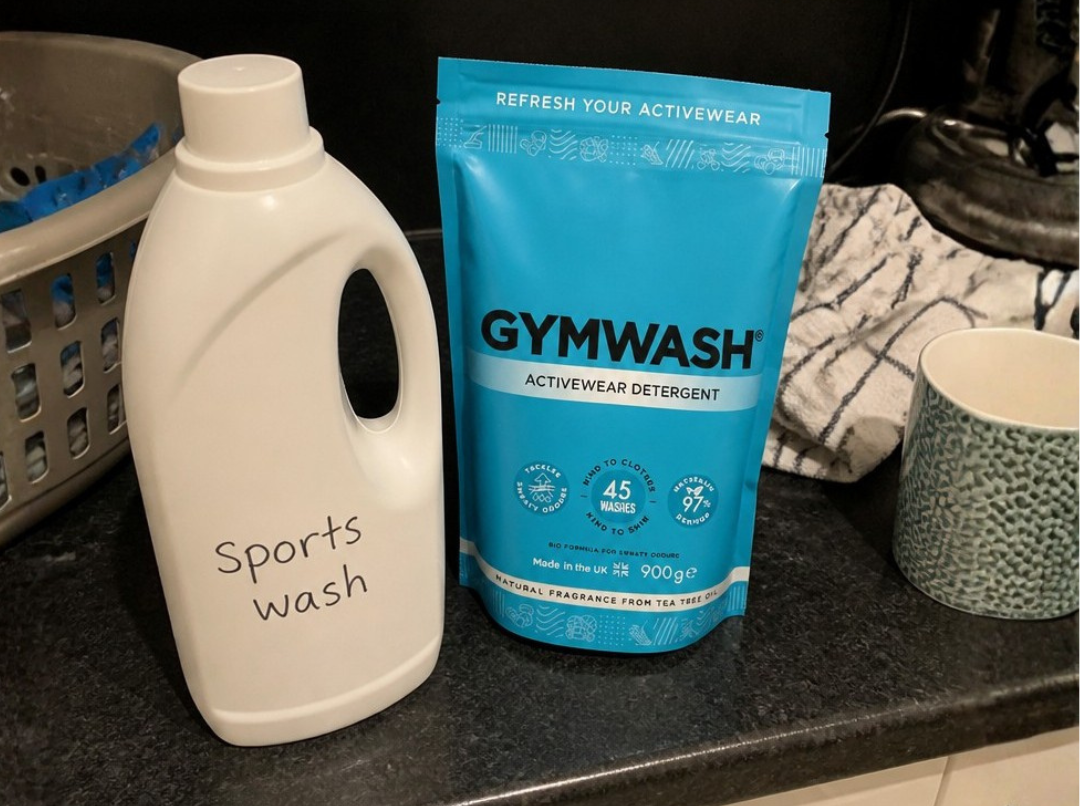
GYMWASH Activewear Laundry Detergent is designed for use on standard polyester, nylon, elastane, cotton and cotton-blend activewear, provided the garment does not require specialist detergent care or have other incompatible care requirements.
GYMWASH is formulated with 97% naturally derived ingredients and contains no optical brighteners or SLS/SLES.
Its biological formula contains protease (subtilisin), amylase, cellulase and lipase.Subtilisin is a serine endopeptidase, or protease that acts on proteins, which helps explain why the product should not be used on protein-based fibres such as wool, merino and silk.
Waterproof clothing and GORE-TEX are excluded for a different reason. Their membranes, coatings and water-repellent finishes can require specialist cleaning, while GORE-TEX specifically recommends liquid rather than powder detergent for its outerwear.
For compatible synthetic and cotton activewear, GYMWASH is formulated for best results at 30–40°C, provided that temperature falls within the garment’s permitted range.
If compatible activewear already has an established smell or the odour returns after washing, follow our guide to getting smell out of gym clothes.`
And you can try GYMWASH for yourself by clicking here